
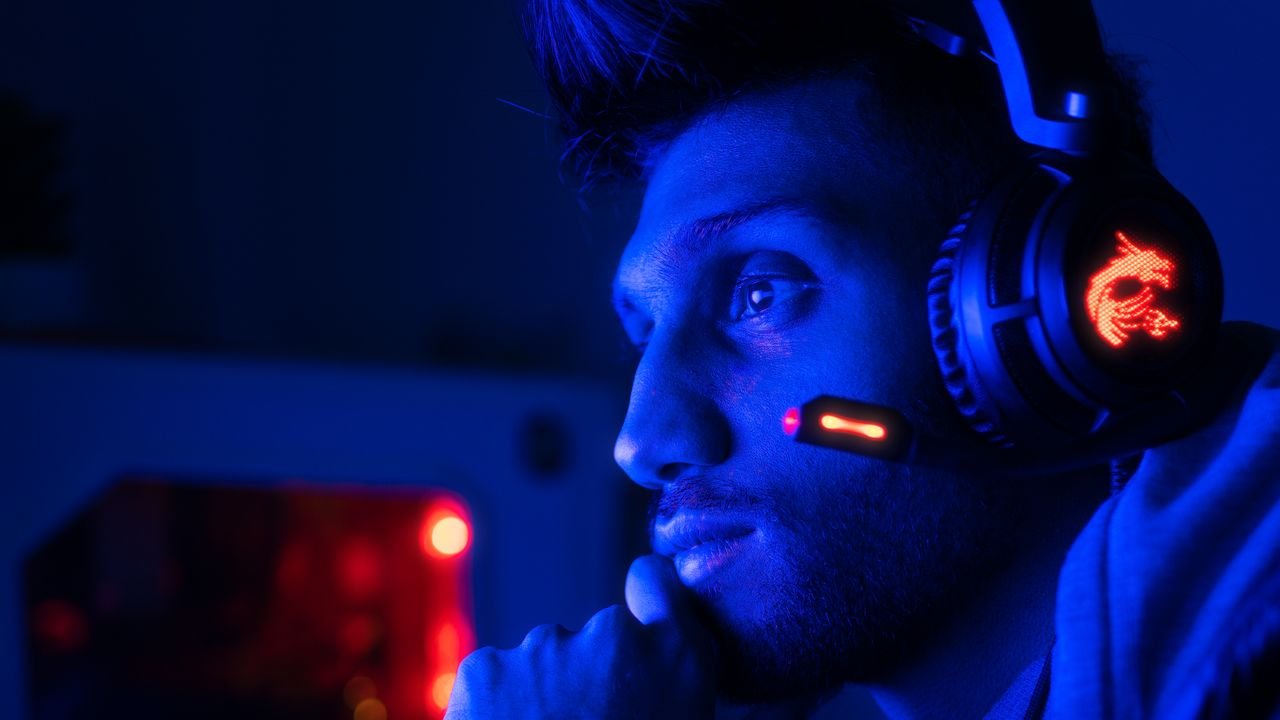
In modern action video games—from chaotic battle royales to intense melee combat systems—visuals only tell half the story. When an enemy initiates an off-screen charge, casts a spell from an upper balcony, or steps up behind you during a chaotic fight, your eyes cannot save you. Your ears have to.
Spatial audio goes beyond classic 7.1 virtual surround sound. By creating a true 3D acoustic sphere that accounts for verticality, distance, and angular sound placement, spatial audio enables you to track targets in 360 degrees without panning your camera.
Here are the best spatial audio gaming headsets for action games, evaluated for directional positioning, acoustic staging, driver quality, and software customization.
What Makes Spatial Audio Great for Action Games?
Not all virtual surround implementations are effective for fast-paced combat. A superior spatial audio headset requires:
-
Planar Magnetic / Hi-Res Drivers: Fast transient response times ensure sound cues (like metallic sword clashes or footsteps) do not muddy into bass explosions.
-
Parametric EQ Customization: The ability to tune specific frequency bands (boosting high-mid footsteps while cutting low-end rumble) via specialized software pipelines like SteelSeries Sonar or Waves Nx.
-
Vertical Acoustic Placement: Distinguishing whether an enemy attack is coming from directly above, below, or on your exact plane.
-
Low-Distortion Soundstage: Clean separation so voice lines, ambient cues, and combat impacts remain distinct simultaneously.
Top Spatial Audio Action Headsets Ranked
1. SteelSeries Arctis Nova Pro Omni / Wireless (Best Overall Spatial Control)
-
Spatial Tech: Sonar Audio Software Suite (3D Spatial Audio) + Parametric EQ
-
Driver Type: 40mm Neodymium Magnetic Hi-Res Drivers
-
Key Feature: Complete 360-degree custom HRTF (Head-Related Transfer Function) tuning.
The SteelSeries Arctis Nova Pro series remains the pinnacle of spatial audio customization. Using the companion Sonar PC software, players can adjust a 360-degree spatial audio wheel, altering distance, elevation, and focal points for specific action titles. Combined with active noise cancellation (ANC) and hot-swappable batteries, its soundstage separation allows you to pinpoint off-screen flankers instantly.
2. Audeze Maxwell (Best Audiophile Soundstage & Clarity)
-
Spatial Tech: Native Dolby Atmos / Tempest 3D Audio support
-
Driver Type: Massive 90mm Planar Magnetic Drivers
-
Key Feature: Distortion-free planar audio clarity with deep spatial imaging.
If pure audio reproduction is your priority, the Audeze Maxwell stands in a league of its own. Its 90mm planar magnetic drivers deliver razor-sharp transient response with virtually zero harmonic distortion. In complex action games like Returnal or Cyberpunk 2077, every laser beam, mechanical cue, and directional threat is placed within a three-dimensional acoustic space.
3. Razer BlackShark V3 Pro (Best Low-Latency Spatial Tracking)
-
Spatial Tech: THX Spatial Audio + Integrated Game Profiles
-
Driver Type: Razer TriForce Titanium 50mm Gen-2 Drivers
-
Key Feature: Dedicated THX spatial game profiles tuned for popular action titles.
Razer’s flagship esports headset features THX Spatial Audio, providing precise directional cues with near-zero audio latency. Its TriForce Titanium drivers physically separate bass, mid, and high frequencies into dedicated internal chambers, preventing deep bass explosions from drowning out subtle environmental footsteps.
4. Turtle Beach Atlas Air (Best Open-Back Spatial Staging)
-
Spatial Tech: Waves 3D Audio via Swarm II Software
-
Driver Type: 40mm High-Fidelity Open-Back Drivers
-
Key Feature: Natural, wide physical soundstage with lightweight comfort.
Unlike closed-back headsets, the Turtle Beach Atlas Air uses an open-back acoustic design. Open earcups allow sound waves to bleed out naturally, creating a physically wider, less claustrophobic soundstage. When combined with Waves 3D audio processing, positional tracking feels startlingly natural and open.
Feature & Compatibility Matrix
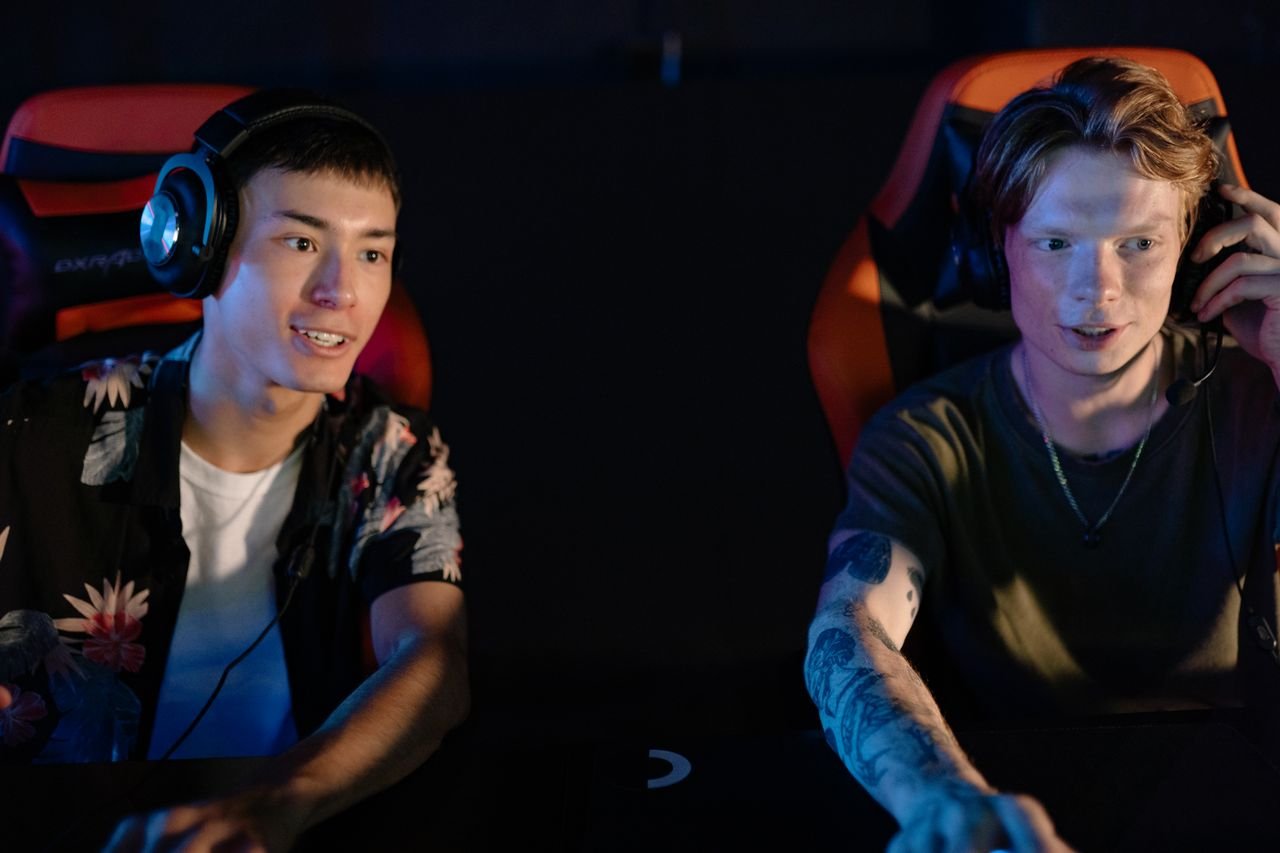
Compare how these premier headsets handle spatial audio across gaming platforms:
| Headset Model | Spatial Technology | Acoustic Design | Platform Compatibility | Best For… |
| SteelSeries Nova Pro Omni | Sonar 3D Spatial | Closed-Back (ANC) | PC, PS5, Xbox, Switch | Custom Spatial EQ Tuning |
| Audeze Maxwell | Dolby Atmos / Tempest 3D | Closed-Back | PC, PS5 / Xbox variants | Pure Audiophile Precision |
| Razer BlackShark V3 Pro | THX Spatial Audio | Closed-Back | PC, PS5, Mobile | Competitive FPS Action |
| Turtle Beach Atlas Air | Waves 3D Audio | Open-Back | PC, PS5, Switch | Wide Natural Soundstage |
How to Calibrate Spatial Audio for Action Games
To get true 3D spatial awareness out of your headset, avoid stacking virtual surround layers:
[Game Engine 3D Audio] ──> [Windows Sonic / Dolby Atmos] ──> [Headset DAC Processing]
               ❌ STACKING ALL THREE CAUSES MUFFLED/PHASED AUDIO ❌
-
Disable Multiple Processing Layers: Choose ONE spatial audio engine. If using in-game 3D audio (such as PS5 Tempest 3D or Overwatch 2’s Dolby Atmos toggle), turn off secondary OS-level virtual surround software to prevent audio phase issues.
-
Flatten Bass Frequencies Slightly: Sub-bass rumbles (explosions, heavy bass drops) mask high-frequency cues (footsteps, reload clicks, sword draws). Lower 60Hz–125Hz EQ bands slightly in software.
-
Boost Upper-Mids (2kHz – 5kHz): The human ear uses upper-midrange frequencies to determine directional positioning and distance. Lightly boosting this range highlights directional cues.
A high-performance spatial audio headset turns sound into an active radar system, giving you the environmental awareness needed to dominate fast-paced combat.